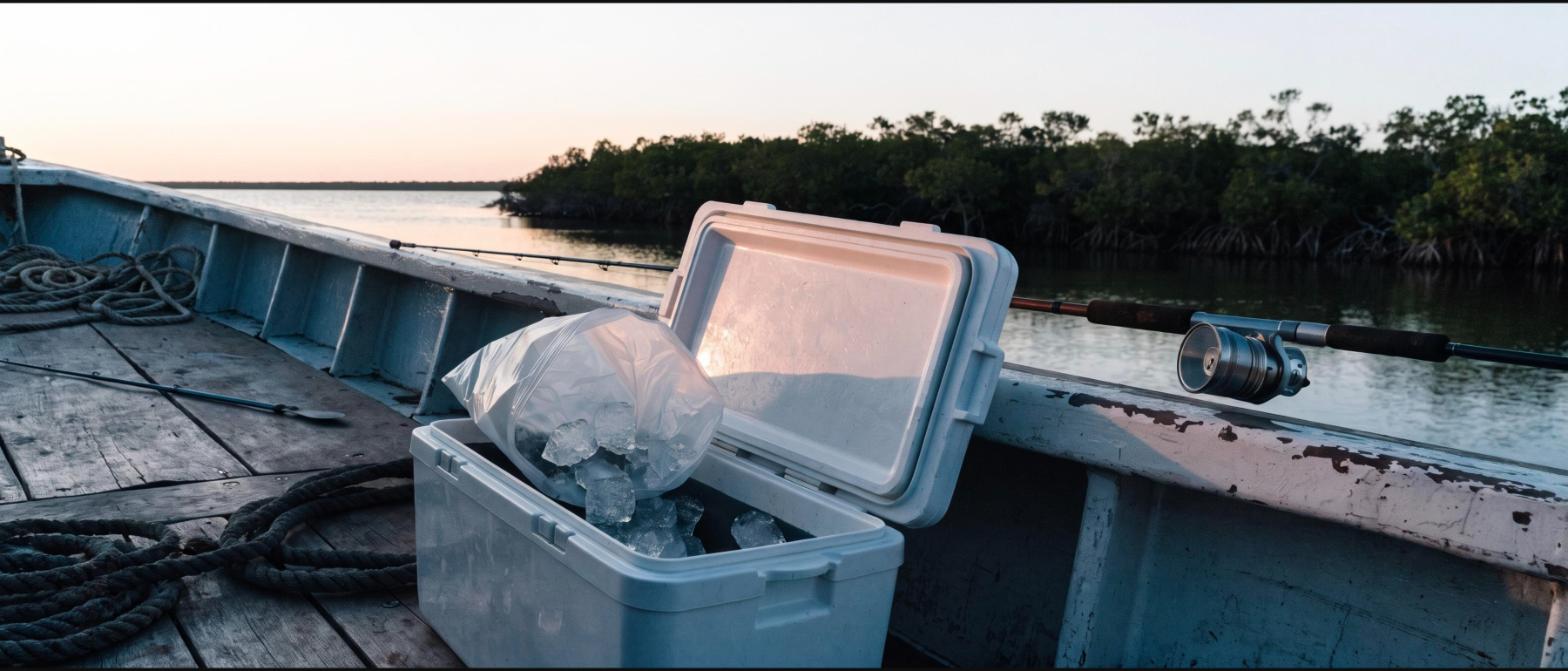
Ask around the ramp about coolers and you will get two arguments that never quite resolve. One camp swears by reusable packs because they are tidy and reusable. The other buys bagged ice every single trip and thinks the pack crowd has never actually kept a fish.
Both are right, because they are solving different problems. The mistake is running one box and expecting it to do both jobs.
Your Catch Wants Wet Ice
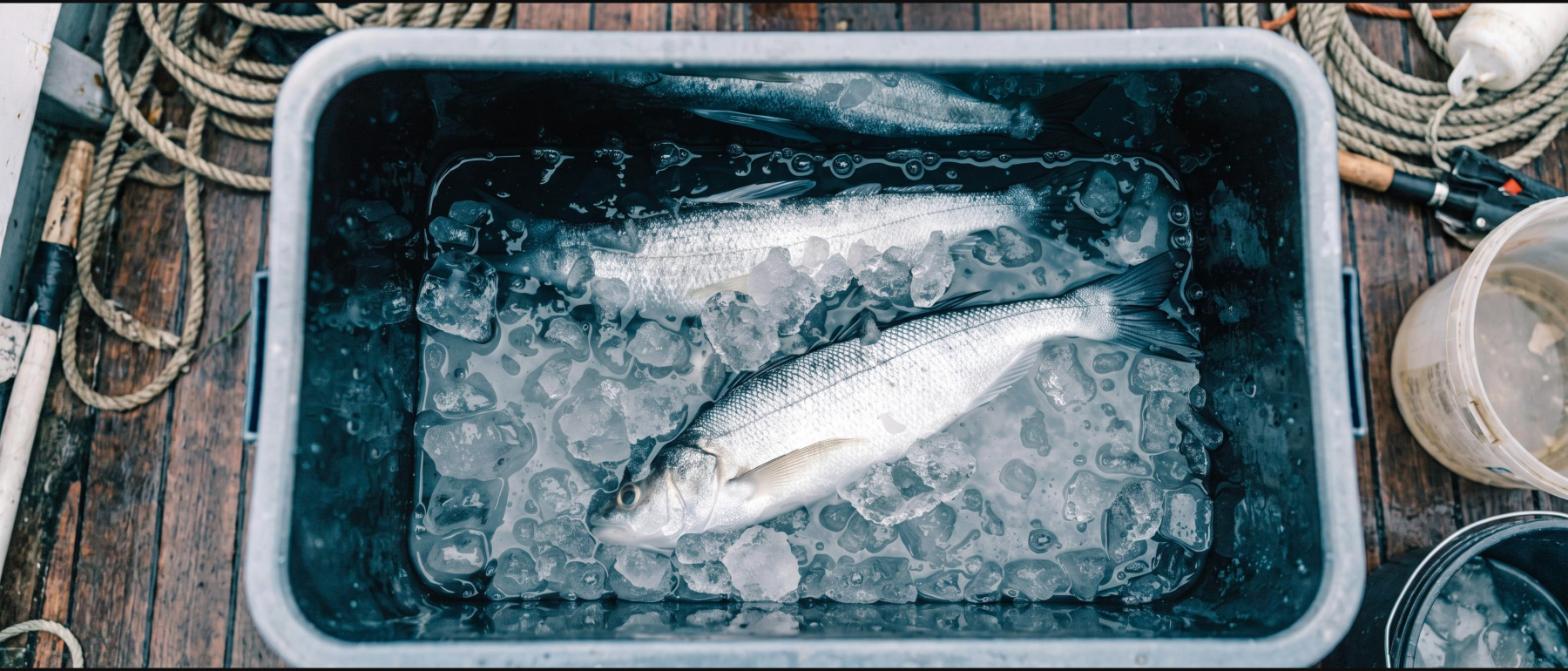
Fish quality is decided in the first hour, not at the cleaning table. Getting a fish down to near-freezing fast is what preserves texture and flavour, and the fastest way to do that is total contact — a slurry of crushed ice and salt water, with the fish fully submerged.
Water conducts heat far better than air. A fish lying on top of a sealed pack is touching cold in one place; a fish in slurry is surrounded by it. That is the whole reason a bag of ice still earns its spot on an inshore boat in August, and why packs alone are the wrong tool for the fish box. They do not melt, which sounds like an advantage until you realise melting is exactly the mechanism doing the work.

Watch: Fish Bag vs Fish Box — What Keeps Your Ice (and Fish) Colder? (YouTube)
Your Lunch Wants the Opposite
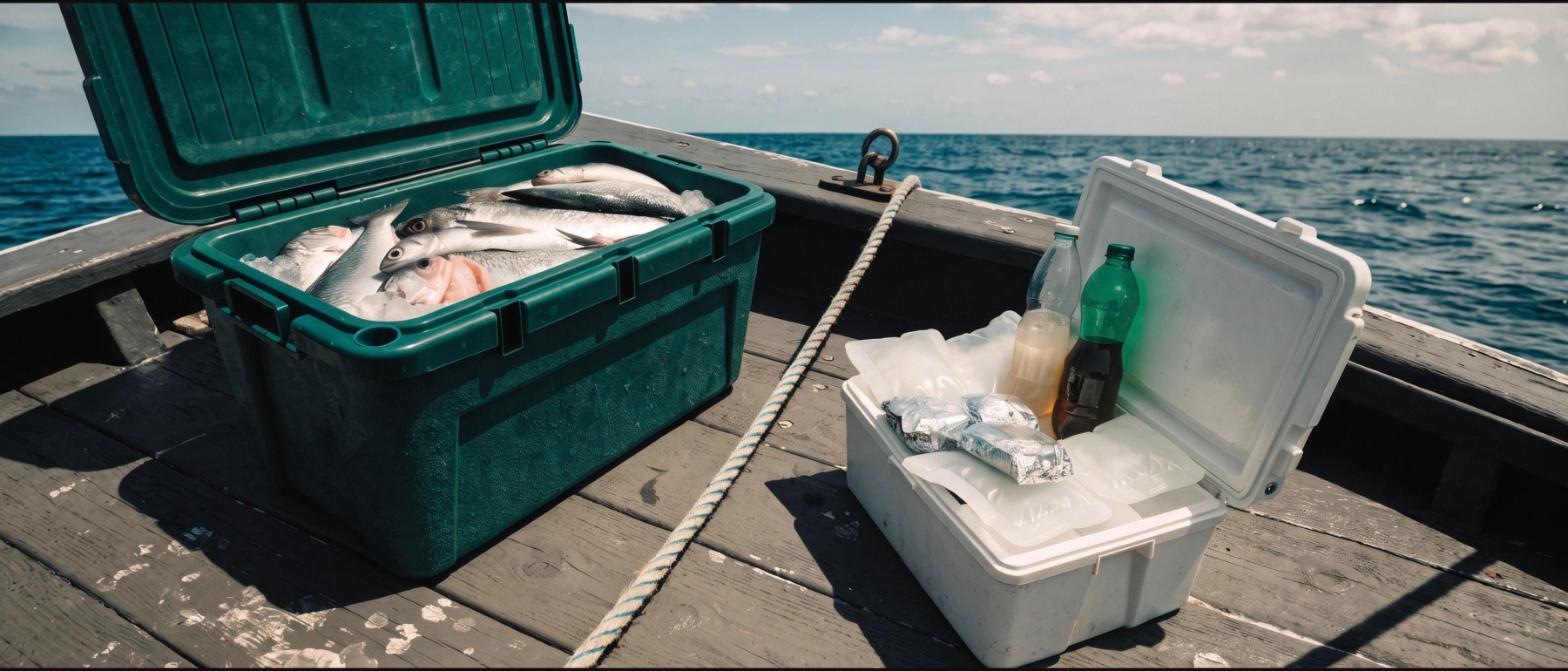
Sandwiches in meltwater are ruined sandwiches. For the second box you want cold without water, which is precisely what sealed packs give you — and no drain plug to forget, no sloshing, nothing to tip across the deck on a running sea.
There is a reasonable middle option too: freeze water in a sealed bag and use it as a block that melts slowly inside its own container, giving you drinking water later. If you are deciding between that and a proper panel, a comparison of what an ice bag for cooler use actually delivers against purpose-built packs is worth reading first — testing has generally found flat panels holding longer than improvised blocks of similar weight.
Practical Notes for an Inshore Day
Buy more ice than feels sensible. A rough guide is two pounds of ice for every pound of fish you expect, and in Gulf or Lowcountry summer heat that is not generous.
Pre-chill the fish box before you leave — a warm cooler eats the first bag of ice cooling its own walls. Bleed fish before they go in. And leave the drain plug shut on the fish box: that cold salty water is doing work, and draining it is throwing away the best part of your cold.
One more thing worth saying plainly. Slurry chilled below freezing can hold fish well, but a cooler is not a refrigerator and the clock still runs. Get the catch home and processed the same day.
